

How New Holiday Booking Cyber Fraud Is Emerging—Akshay Sharma Finds ?
Travel Fraud Is Evolving: New Scams Target Legitimate Booking Platforms
Travel fraud is becoming more sophisticated as scammers change the way they target travelers. New research suggests that cybercriminals are increasingly moving away from obvious fake websites and are instead targeting legitimate travel platforms, verified accommodation accounts, booking outlets, and trusted communication systems.
This shift makes travel scams more difficult to identify. Instead of creating an obviously fake website, criminals may compromise an authentic account or exploit a legitimate booking system. For travelers, this means that even a message appearing inside a genuine reservation system may require careful verification. Here AVS Holidays Akshay Sharma brings a detailed study after reviewing the 2025 fraud audit report from multiple payment gateway companies.
Scammers Are Moving Toward Legitimate Travel Platforms
Traditional travel scams often depended on counterfeit websites, fake booking pages, and advance-fee fraud. However, recent research indicates that criminals are increasingly interested in legitimate travel channels.
According to data discussed in the research, scammers are targeting legitimate travel platforms, verified lodging accounts, and authentic booking outlets during busy travel periods.
The change is significant because travelers naturally place greater trust in established companies and verified accounts.
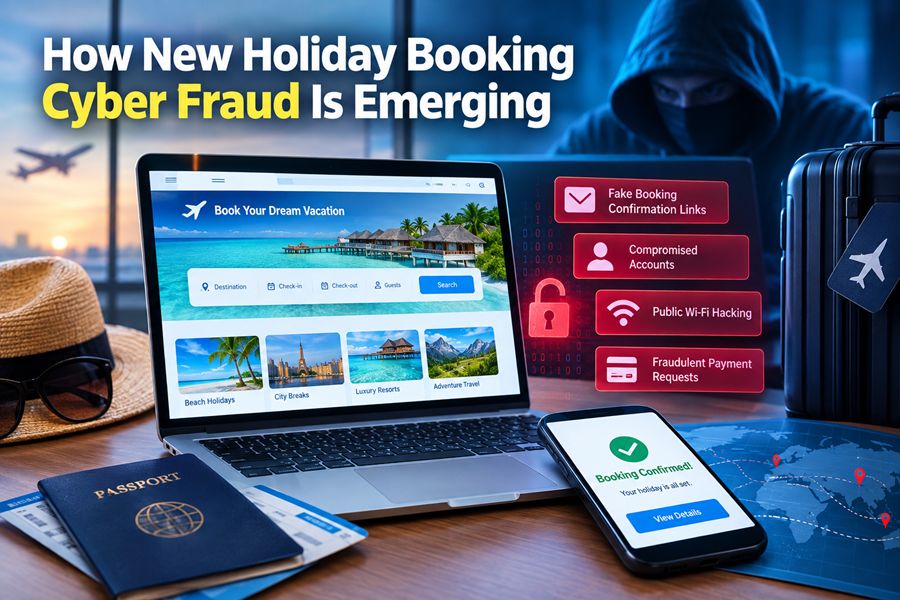
Why Legitimate Accounts Are Attractive to Scammers
A legitimate account can provide criminals with something that a fake website cannot easily reproduce: trust.
Travelers may be more willing to respond to a message when it comes from an account that has:
- A verification badge
- Existing reviews
- A history of bookings
- Previous customer interactions
- An established brand identity
- A familiar booking platform
This makes compromised accounts particularly useful for fraudsters.
Travel Fraud Increases During Peak Travel Seasons
Travel-related services remain particularly vulnerable to fraudulent transactions. According to Mastercard Economic Institute research cited in the article, travel-related services were identified as the third most vulnerable industry to fraudulent transactions.
The research also indicated that travel-related fraud increased by 18% during peak travel seasons at popular summer destinations and by 28% during travel seasons at popular winter destinations.
Why Popular Tourist Destinations Attract Fraudsters -Akshay Sharma Discover
Popular tourist destinations generate large numbers of transactions. This creates more opportunities for criminals to target travelers.
Busy destinations can provide scammers with:
- Large numbers of potential victims
- High transaction volumes
- Heavy demand for accommodation
- Increased demand for transportation
- Travelers who may be unfamiliar with local services
The research emphasizes that frequently visited tourist locations can become attractive targets because of the high volume of transactions.
The Growing Problem of Airbnb and Accommodation Fraud
One of the major developments highlighted in the research is the increase in discussions about Airbnb-related fraud. According to Akshay Sharma Kirti Nagar AirBnb is one of the most populated holiday booking sites.
Investigators reported a substantial increase in mentions of these scams on dark web and Telegram platforms compared with the first half of the year. The research indicated that mentions increased by approximately 30 times.
Spoofed Host Accounts
Scammers are not always relying on completely fake accommodation listings.
Instead, they may focus on spoofed or compromised host accounts. These accounts can appear genuine because they may contain:
- Ratings
- Booking histories
- Verification badges
- Previous customer activity
- Authentic-looking photographs
This creates an important challenge for travelers: a listing can look legitimate while still being used as part of a fraudulent scheme.
Fake Accommodation Listings
Travelers may also encounter properties that do not exist or properties that are significantly different from what was advertised.
Fraudsters can use vacation rental and travel booking websites to promote accommodation that is unavailable, misleading, or substantially different from the original description.
Hackers Are Targeting Hotel Reservation Systems -How Akshay Sharma Elobrate
Another growing concern is the compromise of hotel reservation accounts.
According to the research, criminals have hacked hotel reservation systems and used legitimate internal messaging systems to contact travelers after reservations were made.
The criminals may then send fraudulent payment requests.
Why These Messages Are Difficult to Recognize
A traditional phishing email may contain obvious warning signs, such as an unfamiliar sender or suspicious website.
However, a fraudulent message sent through a legitimate booking communication system can appear much more convincing.
Travelers may assume the message is genuine because:
- The reservation itself is real.
- The hotel is legitimate.
- The message appears within a normal booking conversation.
- The request may refer to actual reservation details.
The research specifically highlights this as a growing concern because fraudulent messages placed inside normal booking confirmation dialogs can be more difficult for consumers to distinguish from legitimate communications.
New Travel Scams Are Expanding Beyond Booking Websites
Travel fraud is no longer limited to fake accommodation or fake travel agency websites.
The research identified increased activity involving several emerging forms of cybercrime.
Fake Travel eSIMs
Travelers increasingly use eSIM services when traveling internationally. Criminals can exploit this demand by offering fraudulent travel eSIM services.
Travelers should therefore verify the provider and service before purchasing an eSIM.
Public Wi-Fi Hacking
Public Wi-Fi can also create cybersecurity risks for travelers. Airports, hotels, cafes, and other public locations often provide convenient internet access, but travelers should remain cautious when connecting to unfamiliar networks.
Deepfake Identity Verification
The research also identified deepfake identity verification services being offered to bypass online travel-related services.
This demonstrates how increasingly sophisticated technology can be incorporated into travel-related cybercrime.
Travel Fraud Is Increasing in Several Destinations
The research identified increases in travel-related fraud activity in several locations, including:
- Cancun, Mexico
- Hanoi, Vietnam
- Dhaka, Bangladesh
- Bangkok, Thailand
At the same time, decreases were reported in:
- San Francisco
- Dublin
- Seoul
- Budapest
- Edinburgh
The research stresses that this is a comparative analysis rather than a ranking of cities according to their overall level of fraud.
Travel Fraud Can Begin Before the Journey
The risks associated with travel fraud can begin long before travelers reach their destination.
The research states that fraudulent travel arrangement cases were expected to rise by 12% in 2024 compared with 2023. Travelers may encounter modified destination images, fake confirmation links, and misleading offers designed to exploit the desire for inexpensive travel.
Fake Travel Offers
Scammers understand that travelers often search for discounts.
They may therefore use:
- Extremely cheap travel packages
- Fake promotional offers
- Misleading accommodation photographs
- False booking confirmations
- Fake payment links
- Discounted sightseeing packages
The goal is often to make the traveler act quickly without verifying the offer.
Travel Cybercrime Is Becoming More Professional
The research identified at least 15 travel-related scam techniques or guidance posts appearing on hidden forums between January and May 2026.
This activity indicates what researchers describe as the increasing professionalization of travel-related cybercrime.
From Simple Fake Websites to Account Compromise
Historically, travel fraud often focused on fake websites and advance-fee scams.
Today, criminals can use compromised legitimate accounts and trusted communication channels. This makes fraudulent activity harder for ordinary travelers to recognize.
The evolution of these attacks also increases the potential for financial losses and travel disruption.
Fake Travel Agencies and Tour Operators
Fake travel agencies and fraudulent sightseeing tours are among the most prevalent types of travel fraud identified in the research.
The article states that deception involving these services is more than four times higher than the global average.
Travel Agency Fraud in Major Destinations
The research highlighted several destinations where fake travel agencies and tour operators represented a significant share of travel-related fraud.
According to the article:
- Hong Kong: 70%
- Barcelona: 64%
- Delhi, India: 64%
- Singapore: 49%
- Cancun: 48%
These figures should be viewed within the methodology and context of the research rather than as a general ranking of destinations.
Beware of Extremely Cheap Travel Deals
One of the clearest warning signs identified in the article is an offer that appears dramatically cheaper than comparable services.
Fraudulent service providers may deliberately undercut legitimate competitors to attract customers.
What Happens After Payment?
A traveler may pay for a tour or travel service and then discover that:
- The tour does not take place.
- The service is significantly different from what was promised.
- The accommodation is unavailable.
- The booking cannot be verified.
- The provider stops responding.
The research warns that drastically reduced prices can be an important warning sign.
Taxi and Car Rental Scams
Transportation is another important category of travel fraud.
The research identifies taxi scams and fraudulent car rentals as particularly prevalent in certain destinations.
According to the article, taxi and fraudulent car rental scams account for:
- Jakarta: 66%
- Bangkok: 48%
- London: 34%
These figures illustrate how different forms of fraud can dominate different travel markets.
Why Transportation Scams Can Be Effective
Travelers arriving in an unfamiliar destination may not know:
- Normal transportation prices
- Reputable rental companies
- Standard taxi practices
- Local booking procedures
This lack of familiarity can make it easier for dishonest providers to exploit travelers.
Fraudulent Lodging Reservations
Accommodation fraud remains another major concern.
The research identifies fraudulent lodging reservations in destinations including Phuket, Thailand, and Antalya, Turkey.
The reported proportions of travel-related fraud were:
- Phuket: 39%
- Antalya: 35%
Scammers may use vacation rental platforms or travel booking websites to advertise accommodation that does not exist or is significantly different from what was advertised.
How Fake Accommodation Scams Work
A fraudulent accommodation offer may appear attractive because it includes:
- Professional photographs
- Attractive prices
- Detailed descriptions
- Positive ratings
- Booking availability
- Familiar-looking communication
The combination can make it difficult for travelers to immediately recognize the fraud. For more amazing data and status , go to AVS Holidays News section .
Modern Travel Fraud Is Based on Trust
One of the most important conclusions from the research is that modern travel fraud is increasingly about trust rather than obvious deception.
At ITIC Americas 2026, attendees learned that criminals are taking advantage of the confidence consumers place in legitimate companies, verified accounts, and established services.
Why Trust Has Become a Target
Travelers naturally trust:
- Recognized travel companies
- Verified accommodation providers
- Established booking platforms
- Existing reservation records
- Official-looking messages
When criminals gain access to these trusted environments, their scams can become significantly harder to identify.
How Travelers Can Protect Themselves
The changing nature of travel fraud means travelers need to remain cautious even when dealing with apparently legitimate services.
Verify Payment Requests
If a hotel, travel company, or accommodation provider suddenly asks for an additional payment, travelers should verify the request independently before sending money.
Do not automatically trust a payment request simply because it appears inside an existing booking conversation.
Be Careful With Unusually Cheap Offers
A very low price can be attractive, but it can also be a warning sign.
Compare the offer with prices from established providers and investigate the company before making a payment.
Check Booking Information Carefully
Travelers should carefully review:
- Booking confirmations
- Accommodation details
- Payment requests
- Confirmation links
- Contact information
- Cancellation conditions
Unexpected changes should be independently verified.
Maintain Healthy Skepticism
The research recommends that travelers maintain a healthy level of skepticism when planning their next trip.
Consumers should be particularly careful with offers that seem too good to be true and should avoid making potentially unwise investments without appropriate verification. So you can connect Akshay Sharma travel agent, to more hassle-free travel.
The Future of Travel Fraud
Travel fraud continues to evolve alongside technology.
The research reviewed NordStellar data covering dark web and Telegram activity from January 2023 through May 2026. Researchers also cautioned that discussion counts should be considered a general indicator of criminal activity rather than an exact measurement because spam and repeated posts can influence the totals.
The trend nevertheless demonstrates an important development: criminals are increasingly looking for ways to exploit trusted travel ecosystems.
Conclusion: Travelers Need to Think Beyond Fake Websites
Travel fraud is changing.
The traditional image of a scam involving an obviously fake website is no longer enough to describe the modern threat. Criminals are increasingly targeting legitimate accounts, trusted booking platforms, hotel reservation systems, and established communication channels.
Fake travel agencies, fraudulent tours, accommodation scams, transportation fraud, fake eSIMs, public Wi-Fi threats, and deepfake identity verification services represent different parts of this changing landscape.
For travelers, the most important lesson is simple: legitimate-looking does not always mean legitimate.
Before making a payment, clicking a confirmation link, accepting a last-minute booking change, or responding to an unexpected request, travelers should verify the information through a trusted channel.
A little skepticism and careful verification can help travelers reduce the risk of financial loss and avoid unnecessary disruption during their journey.


Leave A Comment